Designing programmes with schools
與學校一起設計課程
From kindergarten to secondary school, we plan food-waste education around each school’s development plan, year groups and timetable.
- For
- Kindergartens, primary, secondary and tertiary
- Formats
- One-off workshops, learning weeks, term-long programmes
- Fees
- Quoted per programme; ask us
Who we work withLEVELS
FormatsHOW LONG
How it worksSTEPS
- 01EnquireTell us the year group, numbers and dates by WhatsApp or the form.
- 02MeetWe learn what the school needs and its development priorities.
- 03Design and quoteWe send a programme proposal and a quote.
- 04FundingWhere it fits, we support applications such as the Quality Education Fund.
- 05DeliverOur facilitators come to school or lead the trip, with teachers taking part.
- 06Review and continueWe look back at the results and help teachers carry on.
Ask us for a quoteFees depend on numbers, sessions and materials.
FAQQUESTIONS
Can activities take place at school?
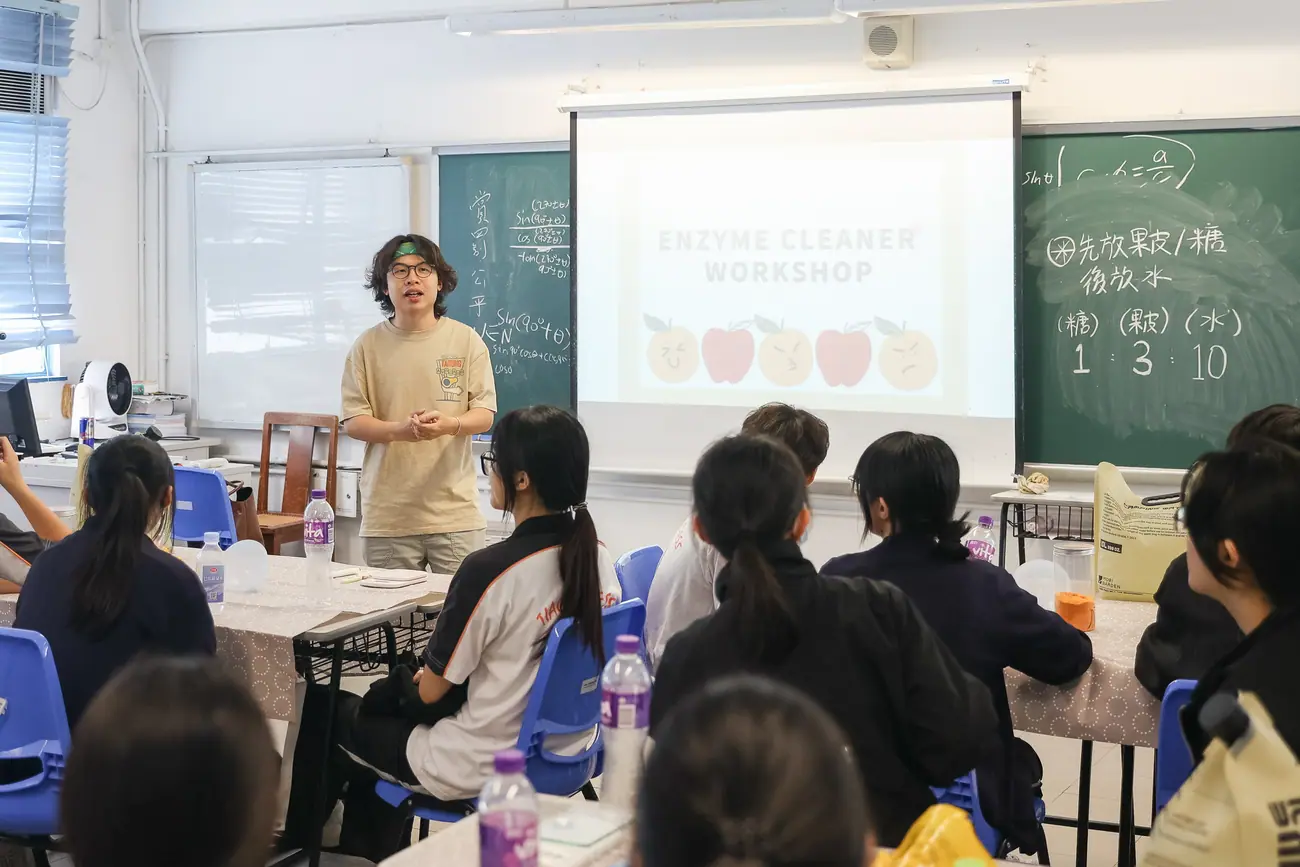
Yes. Workshops, the Vocabulary Cards programme and Black Soldier Fly STEAM can all run at school. Farm to Table takes place on a partner farm.
How many students can take part?
About 25 per workshop group, and 15–25 per group on farm days. A whole year group can come in batches.
Who arranges transport and insurance?
The school arranges the coach and insurance for trips. We provide the programme, facilitators, materials and the farm.
What happens in bad weather?
If Typhoon Signal No. 8 or a Black Rainstorm Warning is in force, outdoor activities are postponed and a new date is arranged.
Can you help with a Quality Education Fund application?
Yes. We can provide programme content, a schedule and a draft budget in line with the fund’s requirements. The fund values teacher involvement, so we suggest a teacher at the school coordinates the application.
How are photos of students used?
Only with the consent of the school or parents, for activity records and our own publicity.
DownloadsPDF
OrganisationsPARTNERSHIPS
- Staff workshopsFood waste and environmental workshops for companies and organisations, or a volunteer day.
- Community eventsFairs, street stalls and collection schemes run together.
- Custom teaching materialsMaterials written for a site and its visitors, such as four sets for TWGHs Eco Village.
- ResearchCommunity research and service-learning with universities.